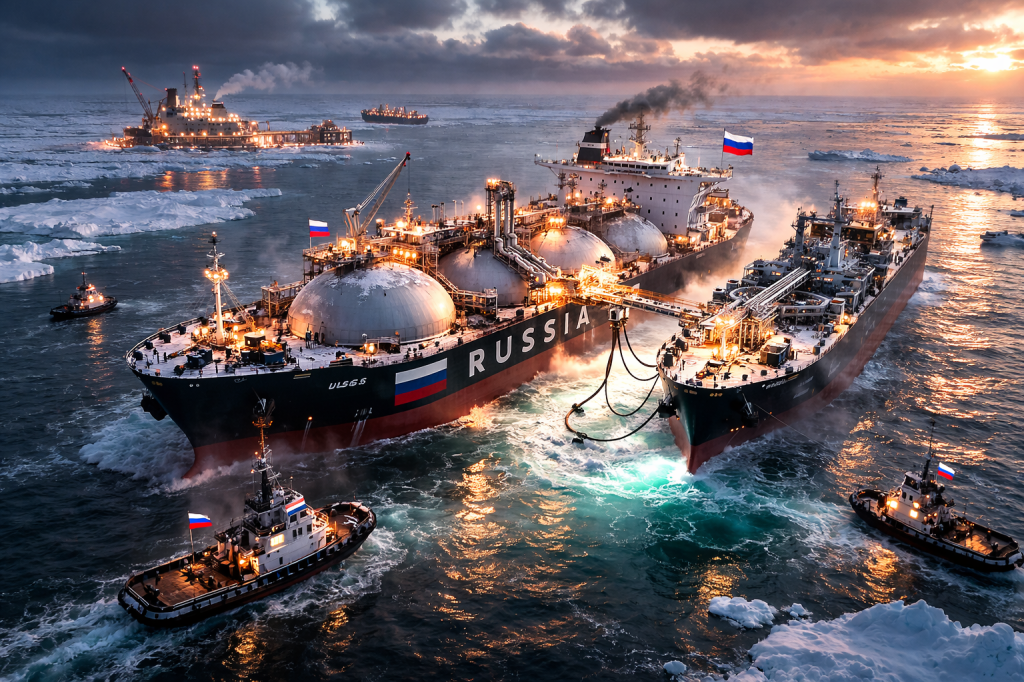
Russia has achieved a notable milestone by successfully executing its first simultaneous triple liquefied natural gas (LNG) ship-to-ship (STS) transfer operations in Arctic waters. This unprecedented event marks a critical advancement in Moscow’s capabilities to manage complex maritime logistics, even against the backdrop of extensive Western sanctions aimed at its energy sector. Such operations are crucial for maintaining the flow of LNG from pivotal projects like Yamal LNG and the newly developed Arctic LNG 2, which are vital to Russia’s economy.
Two of these operations were conducted at the Saam floating storage unit (FSU), where LNG sourced from the Arctic LNG 2 project was simultaneously offloaded and reloaded for onward shipment. A third operation took place near Kildin Island, involving cargo derived from the Yamal LNG project, which has evaded some of the ramifications of the sanctions. The Arc7 ice-class carriers facilitated these transfers, demonstrating the robustness of Russia’s Arctic shipping fleet.
The operational capabilities illustrated in these STS transfers highlight Russia’s adeptness in navigating logistical challenges, thereby ensuring the continuity of its LNG exports even in hostile international conditions.
Impact on Seafarers
The execution of these ship-to-ship transfers not only emphasizes advancements in technology and logistics but also has substantial implications for seafarers operating in these regions. As the demand for LNG transport remains strong, due to both domestic and international imperatives, seafarers may find job opportunities increase within the industry. However, they may also face heightened scrutiny and challenges related to the geopolitical dynamics of operating under sanctions.
This dynamic necessitates that maritime professionals are equipped with updated knowledge on compliance with international sanctions, environmental regulations, and safety protocols that correspond with operations in the Arctic. As Russia further develops its Arctic shipping routes, the importance of skilled seafarers—and the potential for enhanced training and development initiatives—will become even more pronounced. Furthermore, the geopolitical factors influencing these operations will demand agility and adaptability from those working in this sector.
Industry Outlook
The execution of triple LNG STS operations signifies a promising outlook for Russia’s Arctic maritime industry amid sanctions. Analysts suggest this suggests that Russia is not only resilient to external pressures but is actively refining its logistics strategies to secure its place in the global LNG market. The ability to execute these complex operations points to a sophisticated maritime infrastructure that can withstand adversity while catering to energy demands, particularly in nations reliant on LNG imports.
Amidst fluctuating energy supply dynamics and increasing competition, key operators, such as Novatek, are expected to capitalize on these logistics advancements. As highlighted by recent trade data, European demand for Russian LNG remains robust, further substantiated by efforts to secure supply ahead of impending EU sanctions set for January 2027. The phenomenon reflects a strategic pivot among buyers who are continuing to engage with Russia for LNG, despite existing challenges.
In the broader context, these developments may provoke reactions from other countries, leading to strategic shifts in maritime policy and trade regulations. Monitoring the evolving strategies of the Russian maritime sector as it seeks to adapt to the sanctions landscape will be crucial for all stakeholders in the maritime and shipping industries.
Editor’s Perspective
From an editorial standpoint, the implications of Russia’s first-ever execution of triple Arctic LNG STS operations reflect the increasing complexities and changes within the global maritime landscape. As the nation navigates through sanctions and international pressures, the demonstrated operational proficiency of Russian maritime logistics presents a significant counter-narrative.
For industry observers and stakeholders, this event raises pertinent questions regarding the sustainability of resources, international compliance, and emerging trends in subsequent energy projects. The significance of advancing technology and strategic adaptation cannot be overstated in today’s volatile economic climate. It becomes increasingly essential for maritime professionals, regulators, and stakeholders to engage in dynamic dialogues as we move forward into an era defined by rapid transition and transformation in maritime industries.
Ultimately, the execution of these complex multi-vessel operations showcases Russia’s commitment to enhancing its maritime logistics and advancing its geopolitical agenda, positioning itself favorably on the world stage at a time when energy export avenues are pivotal for growth.
—
LNG, Arctic Shipping, Seafarers, Maritime Logistics, Sanctions
 Capt Cibeesh
Leave a comment