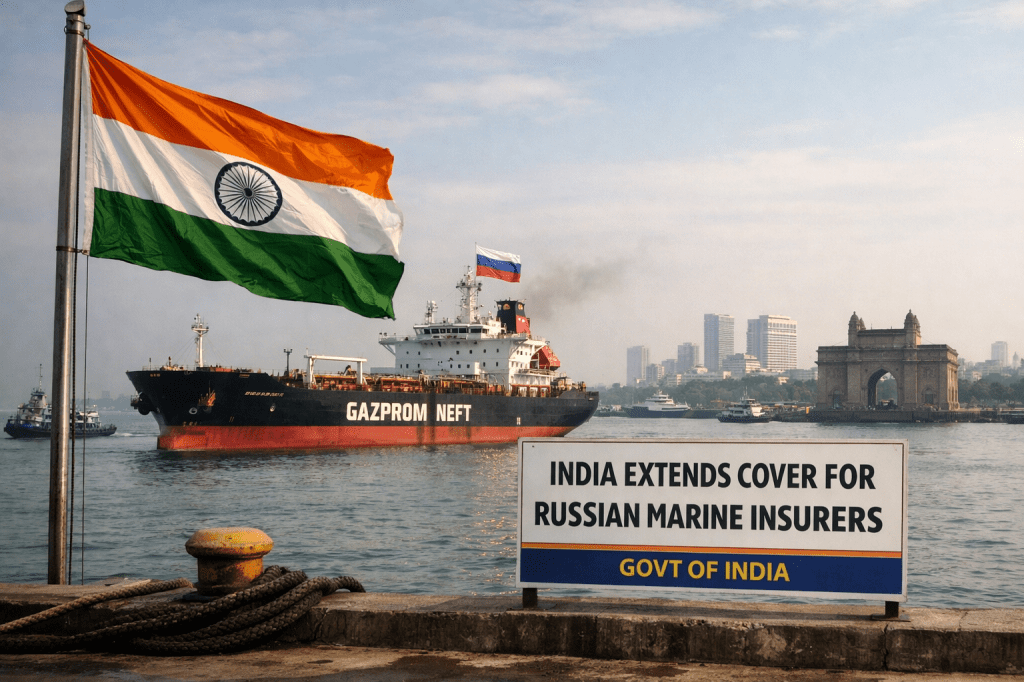
In a significant but temporary measure, the Indian government has granted a one-month extension for four Russian marine insurance companies to provide coverage for tankers calling at Indian ports. This decision is aimed at ensuring the continuity of crude oil imports from Russia amidst increasing international pressures.
The insurers benefiting from this extension include Soglasie Insurance Company Ltd., Ugoria Group of Insurance Companies, Sberbank Insurance, and ASTK Insurance LLC. Their licenses, which were initially expected to expire on February 20, will now remain valid until March 20, allowing them to operate during a critical period for India’s energy supply chain.
This stopgap arrangement highlights India’s dual objectives of maintaining its crude oil import volume while simultaneously navigating geopolitical pressures, particularly from the United States, which has been advocating for a reduction in oil imports from Moscow. While demand from Russia has seen a semblance of stabilization, new suppliers, notably from the Middle East, are beginning to fill the gap, as evidenced by increased shipments from Saudi Arabia.
Impact on Seafarers
The extension of marine insurance coverage for Russian tankers directly impacts seafarers operating within this sphere, particularly those employed aboard ships transporting Russian crude oil. Effective insurance ensures that crews are protected against liabilities including cargo damage and pollution, which can arise from maritime operations. Inadequate coverage could expose seafarers and ship owners to significant financial and legal risks.
Furthermore, this insurance landscape is being reshaped post the Russia-Ukraine conflict, where Western sanctions have intensified, limiting the participation of traditional maritime insurers based in Europe. The reliance on Russian firms for coverage may also entail increased operational risks for seafarers due to the complex regulatory frameworks resulting from the sanctions. Seafarers must be acutely aware of these changes and ensure their vessels comply with evolving requirements.
Industry Outlook
In line with this, the capabilities of insurers will come under scrutiny. The ability of companies to manage diverse risks will determine their market position. There is also a potential ripple effect on marine insurance rates; should demand spike amidst tightening global supply, premiums might escalate, thereby affecting overall shipping costs and logistics.
Editor’s Perspective
As the maritime community watches these developments unfold, it is crucial to recognize the interconnectedness of global trade practices and regulatory environments. The extension of insurance licenses to Russian providers reflects not only a need for immediate action but also signifies the complexities that nations face in balancing economic imperatives with ethical considerations.
For seafarers, owners, and managers, this situation imposes a heightened awareness of compliance, necessitating proactive measures to ensure safety and legal adherence. It is essential to keep abreast of changes in marine insurance regulations and market conditions, as these will have cascading effects on maritime operations and the protection of personnel.
In conclusion, while immediate coverage issues may be temporarily addressed, long-term strategic planning and robust risk management frameworks will be paramount in navigating the tumultuous waters ahead.
 Capt Cibeesh
Leave a comment