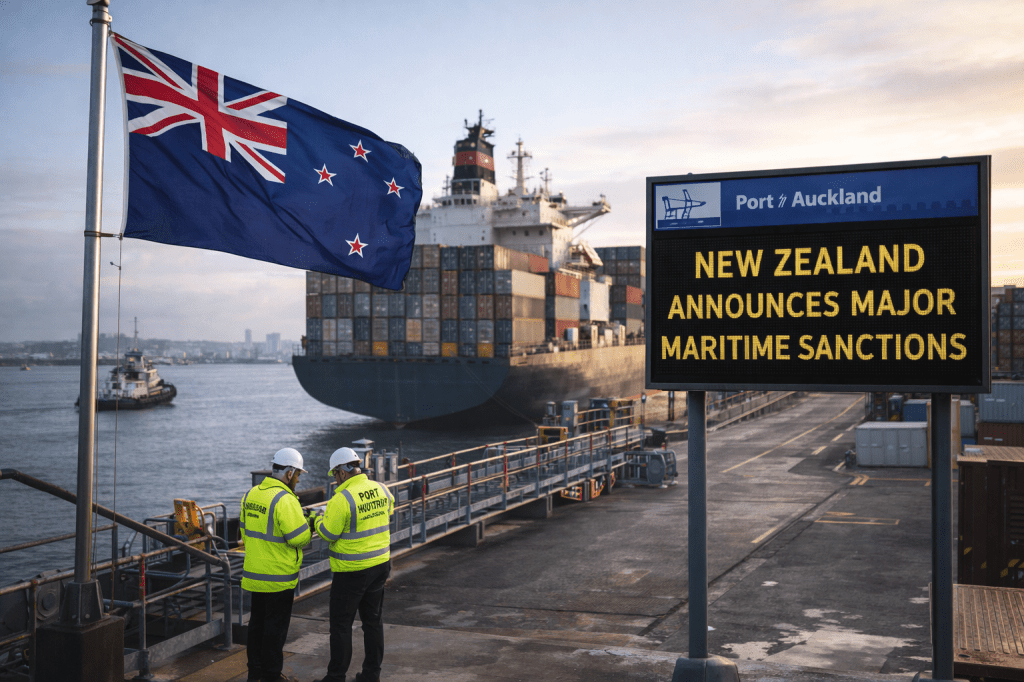
Introduction to Sanctions
The government of New Zealand has announced an unprecedented package of maritime sanctions targeting the Russian Federation, marking its most substantial response since the onset of geopolitical tensions. This initiative includes the designation of 100 vessels associated with Russia’s “shadow fleet,” alongside a reduction in the price cap on Russian crude oil to $44.10 per barrel. Such actions not only reflect New Zealand’s commitment to international sanctions but also underscore its role in the broader coalition seeking to diminish Moscow’s oil-related income amidst ongoing conflicts.
Details of the Sanctions Package
The latest sanctions are designed to expand New Zealand’s enforcement capabilities significantly. By designating a substantial number of vessels, Wellington aims to disrupt maritime operations linked to sanctioned Russian enterprises. The reduction of the price cap on Russian oil is another critical aspect of this package, intended to curb revenues that could potentially finance military endeavors. The alignment of these measures with those of other countries amplifies their impact, reinforcing a unified front against economic aggression.
Global Shipping Implications
The maritime sector will undoubtedly feel the repercussions of New Zealand’s hefty sanctions. With a significant number of vessels now under scrutiny, global shipping networks may experience disruptions as operators navigate the complexities of compliance and enforcement. The designation of vessels associated with the shadow fleet indicates a concerted effort to clamp down on illicit shipping practices, which could alter trade routes and logistics strategies across the globe.
This situation poses a myriad of challenges, particularly in Europe and Asia where Russian oil has been a critical component of energy supply chains. As nations grapple with both legal and logistical issues arising from these sanctions, collaboration and information-sharing among maritime authorities will be essential to mitigating disruptions. Furthermore, the impact on shipping costs may ripple through international markets, leading to increased prices for goods reliant on oil and gas derived from Russian sources.
Relevance to the Indian Maritime Sector
India, as a major player in international trade and a significant consumer of energy resources, will undoubtedly be affected by New Zealand’s sanction measures. The reduction in the price cap on Russian crude oil could complicate India’s oil procurement strategies, as the country has looked to diversify its oil sources amid fluctuating global prices. The shadow fleet, particularly, raises concerns regarding the legitimacy of maritime transactions involving oil transportation to and from the region.
The Indian maritime industry must remain vigilant in ensuring compliance with evolving sanctions frameworks. Moreover, the ripple effects may induce greater caution within shipping lines operating in international waters, as the prospect of penalties increases. As logistics providers assess risk, it will be vital for Indian stakeholders to engage proactively with government authorities to understand the implications fully.
Impact on Seafarers
The sanctions being imposed by New Zealand present unique challenges for seafarers operating in affected regions. With vessels linked to the shadow fleet now designated for sanctions, crew members might find themselves amidst legal and safety concerns. Ship operators will need to implement stringent vetting processes to ensure that their vessels are compliant, potentially leading to job uncertainty for seafarers affiliated with impacted companies.
In addition, the potential for increased maritime inspections may disrupt established schedules and routes. This situation could lead to longer transit times and may affect the availability of qualified crew members for hire, as the maritime sector adapts to new bureaucratic layers of compliance.
Industry Outlook
Looking ahead, the global shipping industry will require agile responses to sustain operations amidst these stringent sanctions. The consolidation of international efforts to restrict Russian oil exports will likely contribute to a reconfiguration of shipping lanes and increased scrutiny on maritime operations. Companies will need to assess their exposure to designated vessels and adapt their operational strategies accordingly.
In addition to enforcement efforts, there is an opportunity for the industry to innovate. Companies can invest in emerging technologies for improved tracking and verification of vessels, which can streamline compliance processes while promoting transparency in maritime transactions. In adapting to these changes, there is a simultaneous opportunity for collaboration among maritime nations to enhance security and efficiency across shipping operations globally.
Editor’s Perspective
The enactment of New Zealand’s extensive sanctions against Russia signals a decisive shift in the maritime geopolitical landscape. As nations align to impose economic restrictions, the importance of liaising with regulatory bodies and fortifying compliance measures cannot be overstated. The impact on global shipping is profound, as players must navigate the complex terrain of sanctions while ensuring operational integrity and cost-effectiveness.
For the Indian maritime sector, proactive engagement and adaptation will be crucial in weathering the storm ahead. It is imperative that ship operators and stakeholders recognize the weight of these sanctions and understand their ramifications on seafarers and logistics alike. As the industry pivots towards a more regulated and compliance-focused operational model, embracing innovation and fostering international partnerships will be integral for future success.
The developments surrounding maritime sanctions against Russia will continue to unfold, and it is essential for all maritime professionals to stay informed and responsive to these changes.
maritime sanctions, global shipping, India maritime, oil price cap, seafarers impact
 Capt Cibeesh
Leave a comment