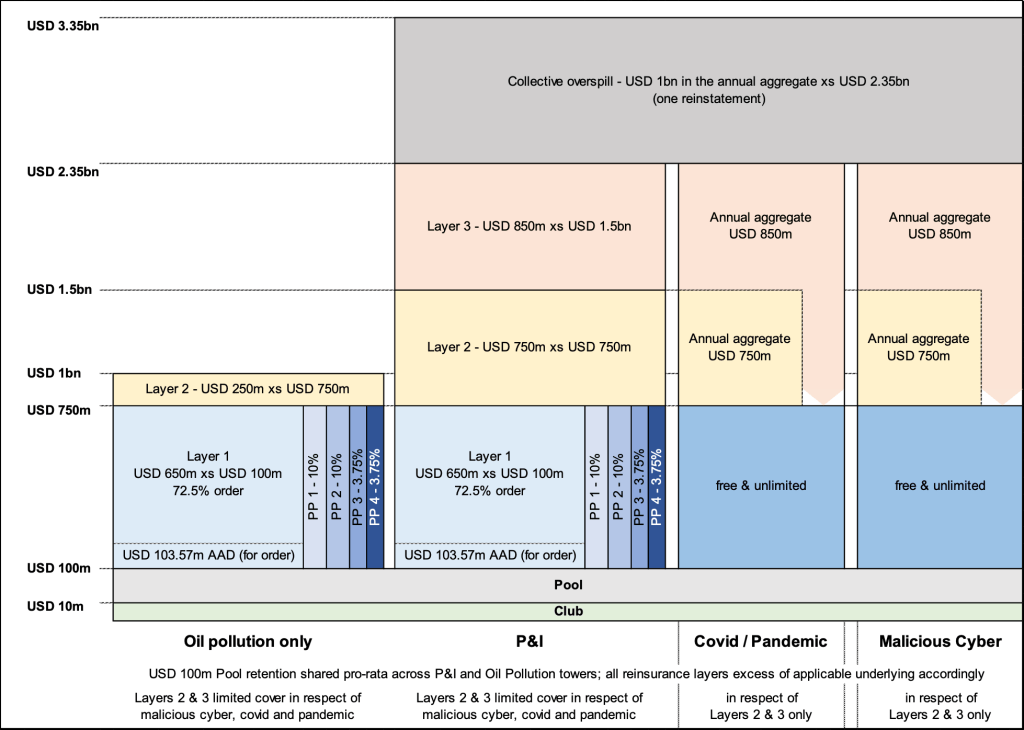
GXL Reinsurance Structure Finalised for 2026/27 Policy Year
The International Group of P&I Clubs has officially announced the finalization of its Pooling and Group Excess of Loss (GXL) reinsurance structure for the 2026/2027 policy year. This decision comes in response to the changing dynamics within the maritime insurance sector, particularly as the industry adjusts to an uptick in claims activity associated with recent environmental challenges.
Impact on Seafarers
As the changes in the reinsurance landscape unfold, seafarers remain a focal point in the broader implications of these decisions. Increased claims and, consequently, rising costs may have a trickle-down effect on operational budgets, potentially impacting international labor agreements within the maritime workforce.
The adjustments to the GXL structure aim to ensure adequate coverages and risk management strategies that directly affect front-line seafarers. Enhanced protection may lead to improved safety measures and a supportive framework for claims, translating to better welfare for seafarers on board. The focus on protecting their interests and the provision of comprehensive coverage signals a growing acknowledgment of their essential role in the maritime industry.
Industry Outlook
With the restructured GXL, the insurance market is poised for a significant transformation over the next policy year. A renewed emphasis on collaboration and collective response to collective risks is anticipated, offering a more resilient framework to manage maritime-related claims. Analysts predict that this evolution could yield both risks and opportunities across different sectors within the maritime supply chain.
The Indian maritime sector, which is integral to global shipping routes, is expected to feel the effects of this restructuring as well. The changes in insurance policies may influence freight rates, insurance costs, and ultimately, trade flow dynamics. Industries reliant on seafaring labor should brace to adjust their strategies to adapt to new risk policies while ensuring safety and compliance.
The complexity of climate-related risks and geopolitical tensions will continue to shape maritime insurance landscapes, necessitating robust strategies to navigate forthcoming challenges. Effective navigation of these uncertainties will require the maritime community, from shipowners to seafarers, to engage in adaptive strategies that align with this newly formed GXL structure.
 Capt Cibeesh
Leave a comment