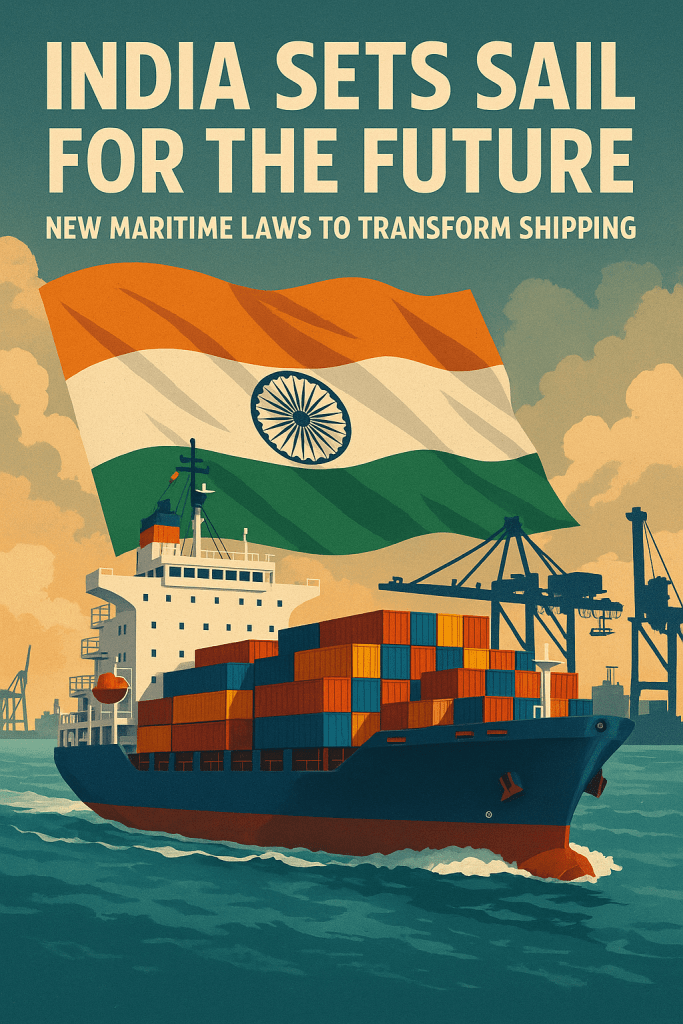
India’s Parliament has just cleared the deck for a new era in shipping by passing the Merchant Shipping Bill, 2025 and the Carriage of Goods by Sea Bill, 2025. These new laws overhaul outdated rules, bring India’s maritime sector up to global standards, and set the stage for safer, greener, and more efficient shipping.
Key Highlights — And What They Actually Mean

1. Modern Ship Registration
Old Rule: Registering a ship in India was a slow, paperwork-heavy process.
New Rule: Digital, time-bound registration and certification of ships.
Why It Matters: Indian ship owners can get vessels into service faster and compete globally, instead of losing out to countries with faster systems.
2. Clearer Liability Rules
Old Rule: Vague laws about who is responsible when cargo is lost or damaged at sea.
New Rule: The Carriage of Goods by Sea Bill aligns Indian law with the latest international treaties (like the Rotterdam Rules).
Example: If a shipment of electronics is damaged en route from Mumbai to Dubai, the law now clearly defines who pays and how claims work—reducing costly court battles.
3. Boosting Indian Shipping Companies
Old Rule: Complex, protectionist rules sometimes made it hard for Indian companies to operate or grow.
New Rule: The new laws encourage Indian-flagged ships and incentivize shipbuilding in India.
Why It Matters: More Indian ships mean more jobs, more exports, and more control over our own supply chains.
4. Stronger Safety and Crew Welfare
Old Rule: Many safety standards were outdated, putting ships and sailors at risk.
New Rule: India now adopts the latest global standards for crew working conditions, safety drills, and ship maintenance.
Example: Indian seafarers will have better onboard safety and rest provisions, matching what’s required in top shipping nations.
5. Strict Pollution Controls
Old Rule: Environmental rules were unclear or weakly enforced.
New Rule: Ships must now follow stricter rules on oil spills, waste, and emissions—matching international marine pollution conventions.
Why It Matters: Cleaner seas and a better global image for Indian shipping.
Why Should You Care?
- Lower Costs, Fewer Delays: Streamlined processes mean goods can move faster and cheaper—good news for businesses and consumers.
- Global Confidence: International companies are more likely to use Indian ports and shipping lines when laws match global norms.
- Jobs & Innovation: Modern rules mean more investments, more jobs, and new opportunities in logistics, shipbuilding, and maritime services.
- Safer, Greener Future: Seafarers get better protection, and Indian waters get cleaner.
The Takeaway:
These new laws aren’t just about catching up—they’re about India staking its claim as a modern maritime powerhouse. By making the rules simple, fair, and globally aligned, India is ready to lead on the world’s shipping lanes.

Landmark Shipping Bill passed in Parliament? What are key highlights?


Leave a Reply